Lil Durks Federal Murder for Hire Trial Enters Final Stage in Los Angeles
- Tim Rings

- 5 minutes ago
- 5 min read
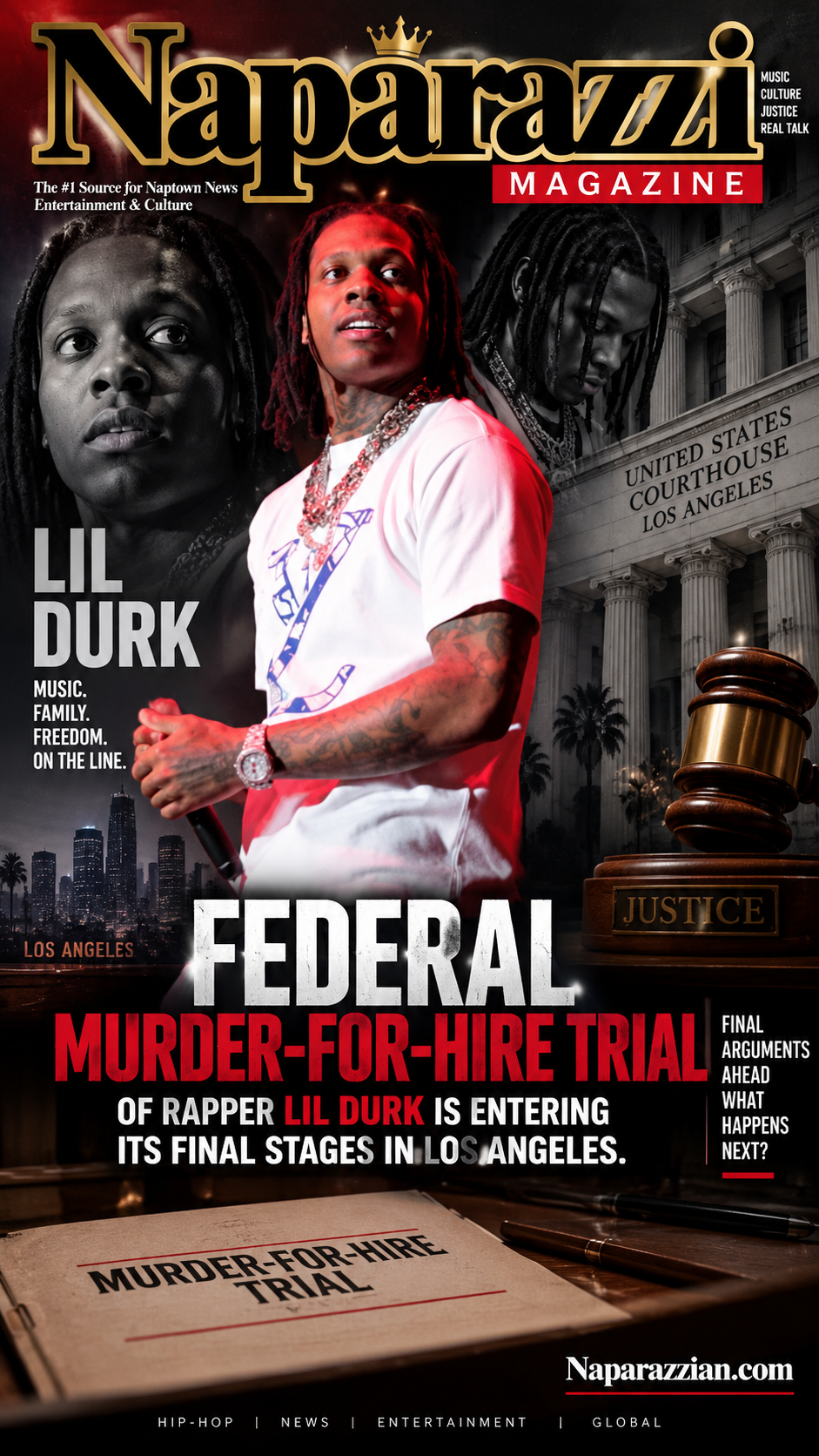
The federal case against rapper Lil Durk has reached the point where every remaining courtroom moment carries extra weight. As the murder-for-hire trial moves into its final stage in Los Angeles, attention is turning from the broader allegations to the final arguments, jury instructions, and the question of what prosecutors have proved.
Lil Durk, whose legal name is Durk Banks, is best known as one of the most visible voices in Chicago drill music and the founder of the Only the Family label. His fame has made the case a national story, but the center of the matter is legal, not cultural. Federal prosecutors must meet a high burden, and the defense has the right to challenge every piece of evidence.
The charges remain allegations unless and until a jury reaches a verdict.
The trial is moving from evidence to decision
The final stage of a federal criminal trial is not one single event. It is a sequence that usually begins after both sides finish presenting evidence. From there, the judge and attorneys address jury instructions, the lawyers make closing arguments, and jurors begin deliberating.
That shift matters. During the evidence phase, jurors hear testimony, review exhibits, and watch how each side builds its version of the case. In closing arguments, attorneys try to connect those pieces into a clear story.
For prosecutors, that often means arguing that the evidence proves each required element of the alleged crime beyond a reasonable doubt. For the defense, it often means pointing to gaps, alternative explanations, or reasons jurors should hesitate before convicting.
In a murder-for-hire case, the details can be extremely technical. Federal prosecutors generally must prove more than suspicion or association. They must connect the alleged conduct to the specific elements of the charged offense. That can include questions about intent, agreement, payment, travel, communications, or actions allegedly taken to carry out a plot.
For a public figure like Lil Durk, the courtroom process also has a second layer. The case is watched by fans, critics, legal observers, and media outlets. Still, the jury’s job is narrow: weigh the admissible evidence and apply the law as the judge explains it.
Why the Los Angeles setting matters
Los Angeles is not just a backdrop. Federal court location can shape the logistics of a trial, the jury pool, and how the case is covered. The city is also one of the country’s biggest entertainment markets, which adds visibility when a well-known rapper faces serious charges there.
Federal trials differ from state trials in several ways. Federal prosecutors work under the U.S. Department of Justice. Federal judges follow federal rules of procedure and evidence. Sentencing, if there is a conviction, follows federal law and federal sentencing guidelines, though judges still make case-specific decisions.
Those differences can affect how the trial unfolds. Federal cases often involve investigators from national agencies, phone records, travel records, financial records, or other evidence that prosecutors argue connects people across state lines.
That does not mean a conviction is automatic. It means the legal structure is different from a local criminal case. The defense can challenge how evidence was gathered, what it shows, and whether it proves the charges beyond a reasonable doubt.
What jurors may be asked to decide
In the final phase, jurors are not asked whether they like an artist, dislike the lyrics, or have opinions about rap culture. They are asked whether the government proved the charged crime.
That distinction is important in high-profile criminal cases. Fame can distort public discussion. Fans may assume innocence because they admire the artist. Critics may assume guilt because the allegations sound severe. The courtroom standard is different from both reactions.
Jurors may need to sort through several types of evidence, depending on what was admitted during trial:
Messages or call records presented by prosecutors
Testimony from witnesses or cooperating individuals
Travel, financial, or location evidence
Arguments about motive, intent, and knowledge
Defense challenges to reliability or interpretation
The phrase beyond a reasonable doubt is the key. It does not require absolute certainty, but it is the highest standard used in the U.S. legal system. If jurors believe the government has not met that standard on a charge, they must acquit on that charge.
The defense does not have to prove innocence. That principle is basic, but it becomes especially important when a case becomes a public spectacle. Prosecutors carry the burden from start to finish.
The public reaction shows the tension around celebrity trials
The Lil Durk case sits at the intersection of criminal law, music culture, and public attention. That mix often creates confusion.
A federal courtroom does not work like a comment section. Evidence must meet legal rules. Witnesses can be cross-examined. Jurors receive instructions about what they can and cannot consider. The judge can limit arguments that are unfairly prejudicial or not legally relevant.
At the same time, celebrity status can make every development feel larger. A routine scheduling issue may be treated as a major shift. A narrow evidentiary ruling may be discussed as if it decides the whole case. That is why the final stage requires patience from anyone following the trial.
The closing arguments will likely be the clearest summary of each side’s position. Prosecutors will present their best version of the alleged murder-for-hire plot. Defense attorneys will present their best reasons for doubt. After that, the jury’s deliberations may be quick, or they may take time.
No reliable conclusion should be drawn from the length of deliberations alone.
What could happen next
Once the case reaches closing arguments and jury instructions, the path narrows. Several outcomes are possible.
The jury could return a verdict on all charges. It could find the defendant guilty on some counts and not guilty on others, depending on the indictment and evidence. In some cases, jurors may be unable to agree, which can lead to a mistrial on unresolved counts.
If there is a conviction, the case would move to post-trial motions and eventually sentencing. If there is an acquittal, the defendant cannot be retried on the same charge because of double jeopardy protections. If there is a mistrial, prosecutors may decide whether to retry the case.
Appeals can also follow in federal criminal cases, especially when the defense argues that legal errors affected the trial. Appeals usually focus on law and procedure rather than a full replay of the facts.
For now, the central issue remains simple: whether the government has proved its case under federal law.
The final stage of Lil Durk’s federal murder-for-hire trial is the moment when attention should shift from speculation to the legal standard. Closing arguments may sound forceful. Public opinion may stay divided. But the verdict, whatever it is, must rest on the evidence jurors were allowed to hear and the law they are required to follow.


Comments